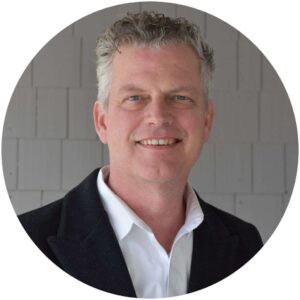
My mentor and friend, Donn Vickers, passed away last month at age 91. I first met Donn in 2002, when I was chosen to participate in a leadership development program. Donn’s death was an occasion to pause and reflect on the wisdom, insights, and lessons we learn from our mentors. I hope you are fortunate to have great mentors too.
Donn taught me about servant leadership, a philosophy that continues to guide the way I show up in the world as a leader. Donn also introduced me to Peter Block, writer, trainer, and founder of the Common Good Collective, in Cincinnati.
My copy of Peter’s book, The Answer to How is Yes: Acting on What Matters, is filled with multi-colored tabs and dog-eared pages that I return to often. One question from the book that I consider and share frequently is: “What refusal have I been postponing?” This question leads us to Peter’s next insight, “If we cannot say no, then our yes means nothing.”
Questions make us better leaders. Questions lead us to explore challenges with curiosity and creativity, often leading us to a better answer than first imagined. Perhaps questions like these resonate with you as a purpose-driven leader with many challenges demanding your time:
- What will happen to the people we serve if we stop serving them?
- Who might we invite into deeper partnerships if we’re willing to name what we can no longer do alone?
- What relationships might become stronger if we were honest about our limits?
- What kind of leader am I becoming when I keep carrying what was never meant to be carried alone?
Developing a system for measuring impact can help you and your organization focus your limited resources, energy, and time on the activities that matter most. An Impact Measurement Framework (IMF) allows leaders like you to use data in real time to improve programs, communicate value, and understand whether your work is creating the desired change.
A measurement framework is a proven tool that will give your purpose-driven organization clarity about what to do and measure, while also giving you the freedom to say “no” to work that doesn’t make the impact your community needs. It provides leaders with a shared language for deciding what matters most. When your team is clear about the outcomes you seek, the strategies most likely to advance them, and the measures that show whether progress is happening, decisions become less reactive and more mission centered.
A strong measurement framework helps leaders and organizations distinguish between work that is important and work that is truly aligned with its highest contribution. It creates the conditions for more courageous conversations:
- Is this activity moving us closer to the change we seek?
- Are we the right organization to lead this work?
- Will saying “yes” strengthen our impact—or quietly pull us away from it?
In this way, measurement becomes a relational leadership tool, not just a reporting tool. It helps staff, board members, funders, and partners understand why a thoughtful “no” may be necessary to protect the deeper “yes” the mission requires.
For organizations working in collaborative and collective impact spaces, this discipline becomes even more essential. Collective impact depends on shared vision, shared measurement, coordinated action, and the ability to adapt together as conditions change. An impact measurement framework helps leaders name where their organization can contribute most powerfully, and where another partner may be better positioned to lead. That kind of clarity does not weaken relationships; it strengthens them, because it invites honesty, trust, and shared accountability around the work that really matters.
Once you and your team get clear about what to measure and why, you will see what work truly advances your organization’s mission, and what work simply consumes your time and energy.
Brené Brown says, “clarity is kind.” Clarity also creates freedom to say “no” with confidence, to focus on and protect what matters most, and to champion the partnerships, decisions, and work that lead to lasting change.
I’m grateful for the wisdom, insights, and resources, like Peter Block’s work, that Donn shared with me over the 24 years I was honored to know and learn from him.
Wishing you deeper clarity and the courage to say “no”.